Rome · Archaeology
Three monuments, one ticket: how to walk the core of ancient Rome
The Colosseum, the Roman Forum and the Palatine Hill form one archaeological complex and share a combined ticket, but they are not one enclosure: three zones, different entrances, and a route that is longer than the map implies. This guide helps you split the day so you do not reach the hill with nothing left in your legs.
What exactly you are buying
The combined ticket opens three places that Rome mentions almost as one: the amphitheatre, the civic centre of the ancient city and the hill where emperors lived. They sit side by side, but each has its own rhythm. The Colosseum is a building with a security check that concentrates the queues. The Forum and the Palatine are an open-air site with little cover and not much shade.
Read the booking page to see exactly what your ticket includes and whether the Colosseum has a fixed entry time. Areas such as the underground levels or the upper tiers may need a separate access, so do not assume them. Tickets are booked on an external site, Weekend in Italy, where you can see prices and availability.
The Colosseum, or why a ruin is still standing
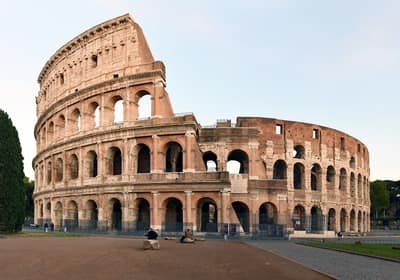
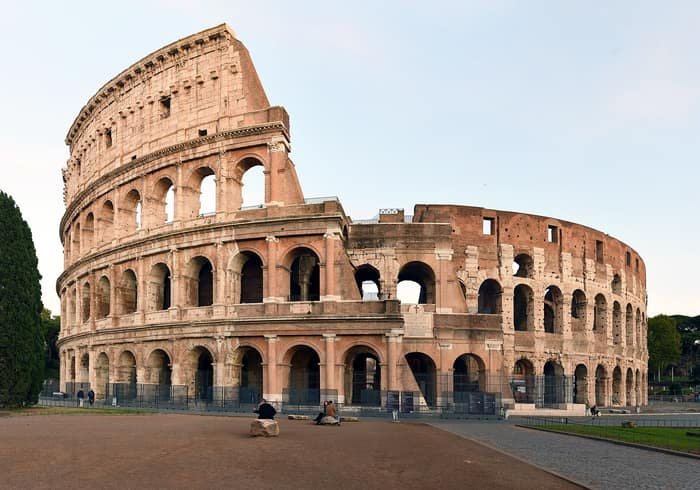
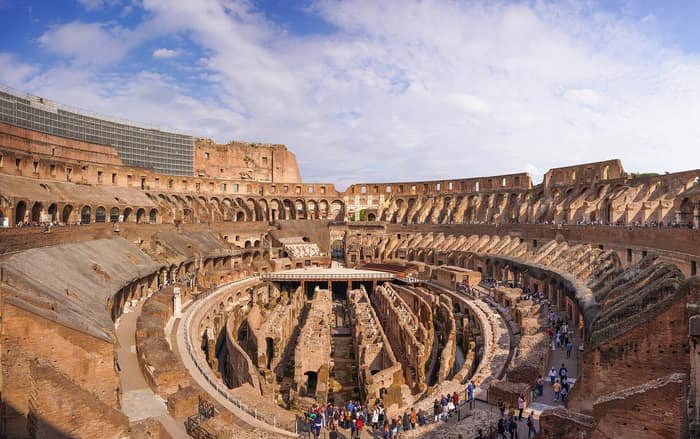
Work began under Vespasian around AD 72 and finished in 80, with his son Titus already on the throne; Domitian made later changes. It was built over the artificial lake of Nero's Domus Aurea, a political gesture: Rome handed back to the people land one emperor had kept for himself. It is made of travertine, Roman concrete and tuff, and hosted gladiatorial contests, animal hunts and other public spectacles.
After antiquity it served as housing, workshops, a fortress and a quarry, which explains the wounds on the facade: earthquakes and stone-robbing. As you walk the arches, notice what is missing as well as what remains. To complete the story of the site, the Domus Aurea is in the same area, the palace the amphitheatre came to replace.
The Forum: a map you have to imagine
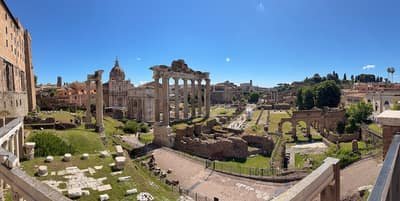
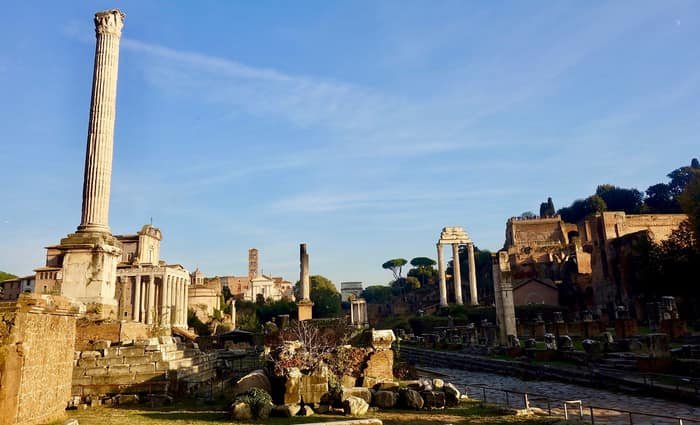
The Roman Forum is the valley between the Capitoline and the Palatine where Romans voted, judged, traded and celebrated triumphs. Today it is columns, foundations and arches, and it makes more sense with one idea in mind: the Via Sacra runs through it from end to end, and the triumphal procession came along it. The travertine paving in the middle dates from the age of Augustus, and underneath lie layers of history that 19th-century excavations gradually uncovered.
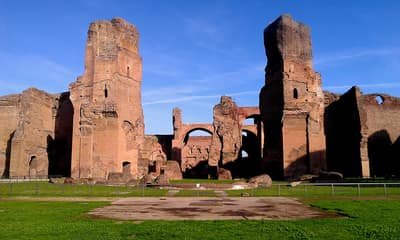
If you want reference points, three are enough: the Arch of Titus at the far end, the Curia (the Senate house) and the Basilica of Maxentius, the last major expansion of the complex, from AD 312. You do not need to name every temple for the visit to pay off.
The Palatine: the hill that rounds off the visit
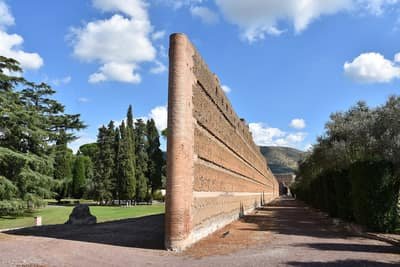
Legend says Romulus founded the city here, and excavations confirm that people lived on the hill long before the Empire. Under Augustus it became imperial ground: remains of the palaces of Augustus, Tiberius and Domitian survive. The word palace itself comes from this hill's name. The House of Livia, wife of Augustus, is one of the few places where frescoes survive, and the Farnese Gardens spread over the ruins with an easy view down to the Forum.
There is little shade and a fair amount of slope. If the Colosseum and the Forum have worn you out, this is the part that suffers, which is a pity: the Palatine is the quietest zone of the complex. The museum on the hill holds finds from the excavations.
Tips before you go
- Security is the bottleneck. With a ticket already booked, the queue that remains is the Colosseum security check. Arrive in good time and without bulky items.
- Choose your order by the Colosseum time. If your ticket fixes a time for the amphitheatre, start there. If not, do the Forum and Palatine first while the heat is low.
- Water and a hat, even in spring. There is little shade and a lot of stone in the sun. Carry water from the start.
- Trainers, not sandals. The ground is uneven, with cobbles and slopes. Poor footwear is paid for on the Palatine.
- If you only have one hour. See the outside of the Colosseum and go in, or climb to the Forum overlook from the Palatine. One place done well beats three in passing.
- Avoid midday in summer. The Forum and the Palatine offer no refuge. Book a morning or late slot if you travel between June and August.
- Read up beforehand. Five minutes on the Forum before you arrive turns loose stones into a place. There is a one-day Rome route that fits it in with other stops.
Frequently asked questions
Does the combined ticket include the Roman Forum and the Palatine?
Yes, the ticket booked here is a combined Colosseum, Roman Forum and Palatine entry. Check the booking page for validity and any Colosseum entry time.
How long do I need?
Half a day at minimum. If you want to climb the Palatine without rushing, plan on the whole day.
Where should I start?
It depends on the time fixed for the Colosseum. If there is no fixed time, many people prefer the Forum and Palatine in the morning and the amphitheatre afterwards.
Can I do it all in one day with children?
It is doable, but with breaks: there is a lot of open ground and little shade. Children often prefer the Colosseum to the Forum.
Do I still queue if I have a ticket?
Yes, but only for the security check. A booked ticket saves you the ticket-office line, not the entry line.
Affiliate link: if you book, this site may receive a commission.