Rome · Art museum
The Borghese Gallery: one villa, twenty rooms, a lot of Bernini
The Borghese Gallery sits in a former country villa at the edge of a park and packs more Bernini, Caravaggio and Canova into its twenty rooms than most first-time visitors expect. The hard part is not the art but the logistics: entry is by time slot, so book before you build the rest of your day in Rome.
A country villa that became a museum
Cardinal Scipione Borghese, nephew of Pope Paul V, commissioned the building as a suburban villa: in the 17th century it stood outside Rome's walls. Flaminio Ponzio designed it from the cardinal's own sketches, and it was meant from the start to show off a collection. That matters for your visit, because many sculptures still stand in the rooms they were made for, not in a neutral display case.
The collection did not survive intact. In the early 19th century Prince Camillo Borghese, Napoleon's brother-in-law, was forced to sell much of the Roman antiquities to the emperor, which is why the famous Borghese Gladiator is now in the Louvre. The villa and its estate went to the Italian state in 1902.
Bernini, room by room
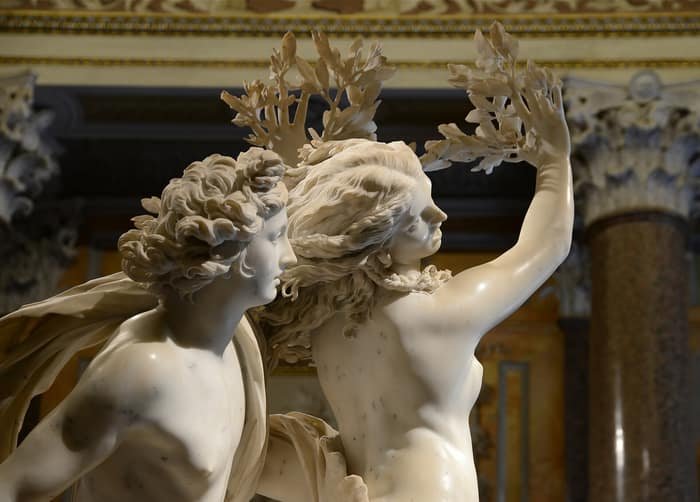
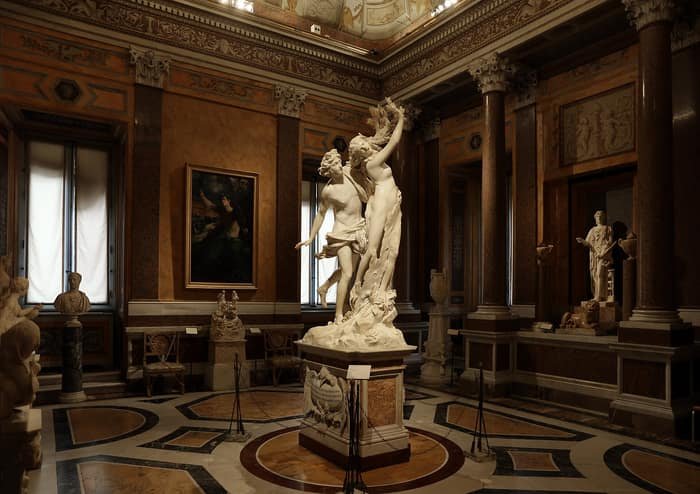
Scipione was one of Bernini's earliest patrons, and the gallery holds a large share of his secular sculpture. Hall II has the 1623 David; the next hall has Apollo and Daphne under a ceiling painted with the same myth; and the Hall of the Emperors has The Rape of Proserpina. Truth, another of his pieces, is also on the ground floor.
A practical habit: walk slowly around each sculpture. They were conceived to be read from several angles, and a half turn can change the whole reading. When rooms are crowded, waiting two minutes for a gap works better than shooting from a distance.
Beyond Bernini, the ground-floor piece people talk about most is Canova's Pauline Borghese as Venus Victrix, which gives the first hall its name. In the big central hall, Mariano Rossi's ceiling fresco uses foreshortening so well it looks almost three-dimensional.
Two floors, two different paces
The main floor is given over mostly to classical antiquities and sculpture, including the gladiator mosaic found on the Torrenova estate in 1834. It is the part that asks for the most time, because nearly every room has something that makes you stop.
The paintings are on the upper floor: Caravaggio (Boy with a Basket of Fruit, Saint Jerome Writing, Sick Bacchus), Titian's Sacred and Profane Love and Raphael's Entombment. If your slot is tight, do not leave the top floor for the end; that is where tired legs and the clock usually win.
Booking and arriving: the part worth planning
There is no improvising here. Entry is for a specific time slot, and the most comfortable slots tend to sell out ahead of time, especially in high season. Tickets are booked on an external site, Weekend in Italy, where you can see prices and availability for your date.
Arrive with margin: the door and the booking check take a few minutes, and your visit time runs from the slot, not from when you cross the park. Backpacks and large bags go to the cloakroom.
Do not confuse the gallery with Villa Borghese park. The park is a separate, open-access space, and strolling through it does not replace a booking: without a ticket for your slot you do not get into the gallery. Nor is it wise to count on an open place the same day; this is a visit to plan with a few days of margin.
Tips before you go
- Book first, plan second. Lock in the Borghese slot before the rest of your Roman day. It is the visit with the least wiggle room.
- Add a fifteen-minute cushion. The walk through the park takes longer than the map suggests, and missing the start of your slot shortens an already short visit.
- Travel light. Bring the minimum: large bags go to the cloakroom, and every extra step eats into your slot.
- If you really have one hour. Prioritise the first three ground-floor rooms (Pauline, David, Apollo and Daphne), then go up for Caravaggio and Titian.
- Comfortable shoes. Two floors of polished marble and a lot of standing in front of artworks; plan for it.
- Pair it with the park, not another museum. After your slot, a walk through Villa Borghese and up to the Pincio feels better than stacking another timed visit.
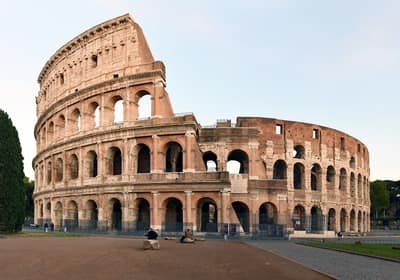
- Fit it into a bigger plan. If it is your first trip, place it inside a wider outline such as three days in Rome, where the Vatican and the Colosseum each take their own day.
Frequently asked questions
Do I need to book tickets in advance?
In practice, yes: entry is by time slot and the popular ones run out. Book before you travel to be sure of a place.
How long does the visit last?
As long as your slot, which generally runs around two hours. That is enough to cover both floors without rushing too much, but not to linger at everything.
Can I bring a backpack?
Large bags and backpacks usually have to be left in the cloakroom. Carry only what you need for the visit.
Which Bernini works are here?
Among others, Apollo and Daphne, The Rape of Proserpina, David and Truth, plus portrait busts of Paul V and Cardinal Scipione Borghese.
Is it in central Rome?
It is inside Villa Borghese park, at the edge of the historic centre and a walk from the Spanish Steps and Piazza del Popolo.
Affiliate link: if you book, this site may receive a commission.